
Going to the dentist has changed considerably over the years. While traditional impressions and X-rays are still useful in many situations, modern dental offices now have access to digital technology that can make diagnosis and treatment planning more accurate, comfortable, and efficient.
One of these technologies is the digital dental scanner. Instead of relying only on trays filled with impression material to create a model of your teeth, dentists can use a small handheld scanner to capture detailed images of your mouth. For patients visiting Kitchener Dentist Centre, understanding how this technology works can make it easier to know what to expect when discussing crowns, bridges, aligners, implants, and other treatments.
What Is a Digital Dental Scanner?
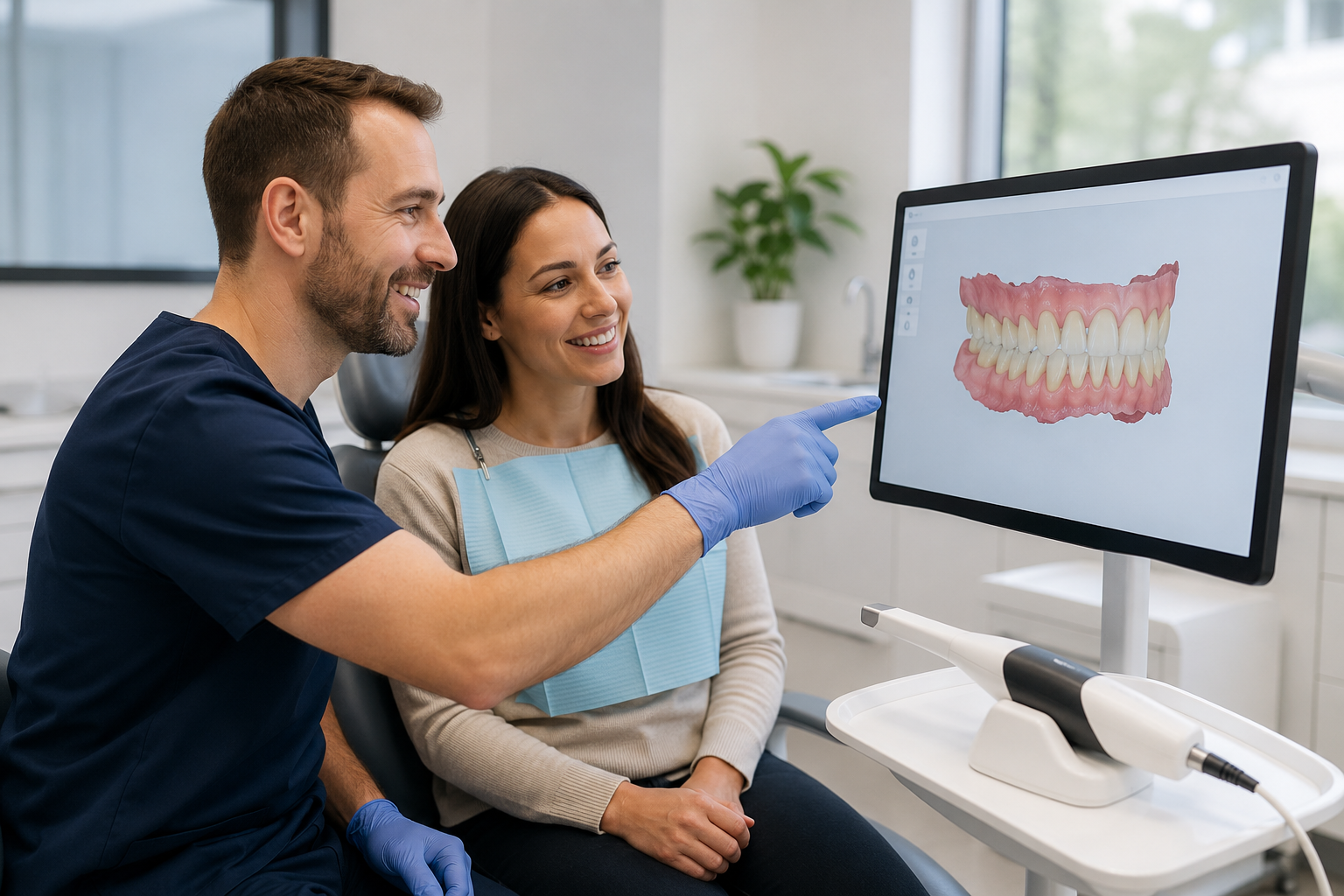
A digital dental scanner is a handheld device that takes thousands of images of your teeth and gums as the dentist or dental professional moves it around your mouth. Computer software then combines those images to create a detailed three-dimensional model.
In many cases, the scan can show the shape, position, and alignment of your teeth without requiring a traditional mould.
Digital scans can also be enlarged and viewed from different angles, giving the dental team a clear picture of areas that may be difficult to examine with the naked eye alone.
A More Comfortable Alternative to Traditional Impressions
Many people remember having dental impressions taken with a tray filled with thick, putty-like material. The tray usually needs to remain in the mouth for several minutes while the material sets.
Although traditional impressions continue to have a role in dentistry, some patients find them uncomfortable, particularly if they have a sensitive gag reflex.
Digital scanning can often provide a more comfortable experience. The scanner is gradually moved around the mouth, and the process can usually be paused if the patient needs a short break.
There is also no impression material to taste or wait for while it hardens.
How Digital Scanners Improve Treatment Planning
One of the biggest advantages of digital scanning is the amount of information it gives the dentist.
A detailed 3D model can help the dental team examine your bite, tooth position, spacing, and the shape of individual teeth. This information can then be combined with dental X-rays, photographs, and a clinical examination when planning treatment.
At Kitchener Dentist Centre, digital information may help support treatment planning for procedures such as:
- Dental crowns
- Bridges
- Clear aligners and orthodontic treatment
- Dental implants
- Night guards and sports guards
- Cosmetic dental treatment
- Replacement teeth
- Bite assessments
The scanner itself does not decide which treatment you need. Your dentist still needs to examine your mouth, review your dental history, discuss your concerns, and determine which options are appropriate.
Digital Scans May Help Create Better-Fitting Restorations
When a crown, bridge, guard, or another dental appliance is being made, accurate measurements are important.
Even small differences in tooth shape or how your teeth meet can affect comfort and function. A digital scan provides the dental laboratory or manufacturing system with a detailed representation of the area being treated.
This can make it easier to design a restoration that closely follows the shape of your teeth and bite.
Adjustments may still be required when the restoration is fitted, but detailed digital information helps the dentist and laboratory start from an accurate baseline.
Patients Can See What the Dentist Sees
Digital scanners can also make dental appointments more informative.
Because the scan appears on a computer screen, your dentist may be able to show you your teeth from angles you have never seen before. Areas of crowding, worn teeth, spaces, bite problems, or the shape of a damaged tooth can be easier to understand when you can see them yourself.
This can be particularly helpful when discussing different treatment options.
Rather than simply being told that a tooth requires treatment, you may have a clearer visual understanding of what the dentist is looking at and why a particular procedure is being recommended.
Can Digital Scans Detect Cavities?
A digital scanner should not be confused with a dental X-ray.
Scanners are excellent for recording the visible surfaces and shapes of the teeth and gums, but they cannot replace all other diagnostic tools.
For example, decay developing between teeth or underneath an existing filling may require dental X-rays to identify. Gum measurements, oral cancer screenings, and physical examinations also remain important parts of routine dental care.
Modern dentistry works best when different diagnostic tools are used together rather than relying on a single piece of technology.
When Might Your Dentist Recommend a Digital Scan?
Your dentist may suggest scanning your teeth when planning restorative, orthodontic, cosmetic, or implant treatment.
You may also benefit from a scan if you notice changes such as:
- Teeth becoming increasingly crowded
- A tooth that has cracked or broken
- Changes in the way your bite feels
- Significant tooth wear or grinding
- A crown or filling that feels loose or damaged
- Missing teeth you would like to replace
- Interest in straightening your teeth
If you experience persistent tooth pain, facial swelling, bleeding gums, a broken tooth, or sensitivity that does not improve, you should arrange a dental examination rather than waiting for your next routine appointment.
Digital Technology Does Not Replace Preventive Care
Advanced dental technology can make treatment planning easier, but preventing dental problems remains just as important.
Brush your teeth twice daily with fluoride toothpaste, clean between your teeth every day, limit sugary snacks and drinks, and watch for any changes in your mouth.
Regular dental examinations and professional cleanings also give your dental team an opportunity to identify problems before they become more complicated.
Highland Kitchener Dentist combines modern dental technology with routine examinations and preventive care to help patients understand their oral health and available treatment options.
Making Dental Treatment Easier to Understand
Digital scanners are a useful example of how dental technology can improve both treatment planning and patient communication. They can create detailed 3D images, reduce the need for traditional impressions in many situations, and allow patients to see their teeth more clearly as they discuss treatment.
However, technology is only one part of good dental care. An accurate diagnosis still depends on a complete dental examination, appropriate imaging, your health history, and a conversation about your individual needs.
If you would like to learn more about digital dental scanning or have concerns about your teeth or gums, contact the office at 519-885-1598 to schedule an appointment and speak with the team at Kitchener Dentist Centre.
DISCLAIMER: The advice offered is intended to be informational only and generic in nature. It is in no way offering a definitive diagnosis or specific treatment recommendations for your particular situation. Any advice offered is no substitute for proper evaluation and care by a qualified dentist.